




Don’t Get Sidelined This Summer
Summer is the perfect time of year to get moving. Longer days and warmer weather make it easier to head out for a run, a bike ride, or a weekend tennis match with friends.
Unfortunately, summer’s sudden jump in activity can also increase your risk of injury. Even one weekend of overdoing it can lead to weeks of pain, stiffness, or reduced mobility.
The good news? Most summer injuries are preventable. With the right preparation and some help from the South Sherbrook Therapy team, you can stay active and keep doing the activities you enjoy all season long.

Why Injury Prevention Matters When You’re Active
It may be surprising, but many of the sports- or activity-related injuries we see at our clinic don’t result from a single major accident. Instead, they develop over time, usually due to several different factors, such as:
- Fatigued muscles
- Training volume that increased too much and too quickly
- Missed recovery time
- Improper movement patterns
- Ignore pain or dysfunction
This is especially common among adults who stay active while balancing work, family, and busy schedules.
What Are Some Common Injuries We See at South Sherbrook Therapy?
- Pain and irritation in the Achilles tendon
- Runner’s knee
- Plantar fasciitis
- Shin splints
- Rotator cuff irritation
- Low back pain
- Muscle strains
Fortunately, physiotherapy plays an important role in addressing these concerns before they become more serious. Our team will perform a comprehensive evaluation of your strength, mobility, and movement patterns and create a personalized care plan based on your goals. Plans are movement-based, with an emphasis on addressing the underlying cause of your injury to improve long-term outcomes.
However, we also think injury prevention is the key to staying active in the long run. Many of the principles we use in our rehab plans can also help you protect yourself from injury.
Five Tips from Our Team to Stay Active and Avoid Injuries This Summer
1. Gradually Increase Activity
One of the biggest mistakes active adults make is doing too much too soon. Sudden increases in running mileage, hill training, or high-intensity workouts can overload muscles, tendons, and joints.
Gradually increasing your activity levels gives your tissues time to adapt. We suggest:
- Starting with shorter sessions
- Always incorporate rest days into your schedule
- Build intensity over several weeks
Remember, consistency over several days is more effective than pushing too hard in one workout.
2. Prioritize Strength Training
Weak muscles can place extra stress on supporting joints, including the hips, knees, and lower back. Targeted strength training can help improve control and reduce strain during repetitive movement.
It doesn’t need to be complicated. Even two sessions per week can make a meaningful difference, and our team can help you pick out the right exercises for your needs.
3. Don’t Skip Recovery
Rest days are an essential part of training. Without enough recovery time, tissues can become overloaded and more prone to injury.
Make sure to schedule time for active recovery–walking, yoga, or mobility exercises are all good choices. Sleep, hydration, and nutrition also play important roles.
4. Pay Attention to Pain
Pain is a protective signal, not necessarily a sign of damage. Either way, it shouldn’t be ignored. Many active people try to push through pain, only for the underlying problem to become severe enough to require treatment. Look for these early warning signs:
- Pain that worsens during activity
- Swelling
- Morning stiffness
- Reduced mobility
- Pain that lingers for days after exercise
Addressing these issues early can shorten recovery time and prevent compensation patterns that lead to additional problems.
5. Warm Up Before Activity
Cold muscles and stiff joints don’t respond well to sudden activity and are more likely to be injured. A good warm-up should:
- Last 10-15 minutes
- Incorporate movement prep (such as leg swings or lunges)
- Include easy cardio, such as brisk walking
- Mirror the movements you’ll be performing during your main activity

Stay Active With the Right Support
We want you to feel energized, strong, and healthy all summer long. Unfortunately, pain and injury can quickly interfere with those goals.
However, preventive care, smart training habits, and early treatment can help you continue doing the activities you enjoy. The South Sherbrook Therapy team is here to support your goals so you can spend the summer doing what you most enjoy. Book an appointment today to get started.
Summer Injury Prevention True or False Challenge
Test your knowledge and stay active all summer long ☀️🏃♂️🚴♀️
Follow Us on Social Media!

6 Tips for a Healthy Summer
Your diet affects many aspects of your well-being including your immune system, bone health, muscle function, inflammation and pain. In summer, it can be difficult to keep good nutrition at the forefront especially with barbeques and cookouts popping up everywhere you look — so here are six simple ways to help you stay healthy this season.
1
Swap Snacks for Fruits & Vegetables
2
Replace Steak with Fish
3
Reduce Saturated Fat Intake
4
Cut Down on Sugary Drinks
5
Drink Enough Water
6
Don’t Skip Breakfast
June Word Scramble
brerireastws
aaointcv
unesecnsr
emrmus
dnelomea
iaordungta
Answer Key
strawberries
vacation
sunscreen
summer
lemonade
graduation
Helping Active Adults Move Better
Improve performance, recover smarter, and reduce injury risk with personalized athletic therapy support.
Athletic Therapy: Helping Active Adults Perform and Recover Better
It’s clear that smart training and recovery habits can help active adults stay healthy all season long. But did you know that athletic therapy can play an important role in that process?
Whether you are training for a 10K, love playing pickup basketball, or are trying to stay generally active, athletic therapy at South Sherbrook Therapy can help improve performance, build your tissue tolerance, and reduce your injury risk.
Strength & Stability
Build muscular control and improve resilience during physical activity.
Movement Optimization
Improve mobility and movement efficiency for safer performance.
Injury Prevention
Identify weaknesses early and reduce future injury risk.
Recovery Support
Recover faster with targeted exercise and recovery planning.
What To Expect
- Functional movement assessments
- Targeted strengthening exercises
- Balance and coordination training
- Safe return-to-activity planning
Additional Support
- Taping and bracing support
- Soft tissue treatment
- Recovery and mobility planning
- Sport-specific programming
Stronger Movement Starts at South Sherbrook Therapy
Staying active should feel rewarding, not frustrating. If pain, recurring injuries, or movement limitations are affecting your performance, our team can help you move better, recover smarter, and stay active long term.
BIRD DOG
Core • Lower Back • Glutes
Start on your hands and knees on a mat or table. Brace your abdominals and keep your back flat. Slowly raise one arm straight out in front of you while simultaneously raising your opposite leg back behind you until both limbs are straight and parallel with the ground. Lower them back down and repeat with your other limbs.
Track Your Sets
Thank You For Subscribing!
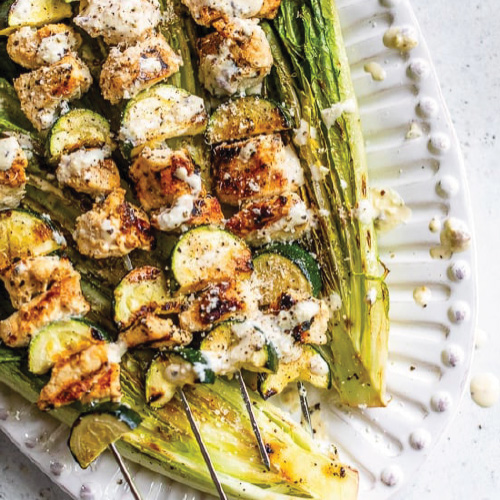
These Caesar-Marinated Chicken Kabobs with Zucchini and Grilled Romaine bring bold summer flavor to the table with juicy grilled chicken and fresh seasonal vegetables. It’s a satisfying, protein-packed meal that’s perfect for cookouts, weeknight dinners, or healthy outdoor dining.
Enjoy This Seasonal Healthy Recipe!
Caesar-Marinated Chicken Kabobs with Zucchini and Grilled Romaine
- 2 anchovy fillets, finely chopped
- 1 small garlic clove, minced or grated
- ⅓ cup grated Parmigiano Reggiano
- ¼ cup fresh lemon juice
- 5 Tbsp Greek Yogurt
- 1 Tbsp extra-virgin olive oil, plus more if needed for the romaine
- 1 ½ tsp Dijon mustard
- ½ tsp freshly ground black pepper
- 1 ¼ pounds skinless boneless chicken breast or thighs, cut into 1-inch cubes
- 8 long wooden or metal skewers
- 1 zucchini
- 1 large or 2 small heads romaine
- ½ tsp kosher salt
- Cooking spray
To make the Caesar marinade
- Add the anchovies, garlic and pepper to a large bowl and use your fork to mash into a paste.
- Add the cheese, lemon juice, yogurt, 1 Tbsp olive oil, and mustard, and pepper and stir to combine.
- Reserve half for serving.
- Add the diced chicken to the bowl with the remaining dressing and stir to coat.
- Set aside to marinate at room temperature for 30 minutes or refrigerate overnight.
For the kabobs
- If using wooden skewers on an outdoor grill, soak them in water for at least 30 minutes.
- Trim the ends from the zucchini, halve it lengthwise, and cut it into semicircles between ½- and 1-inch thick.
- Separately, cut the romaine in half (if using small heads) or quarters (if using a large head), leaving the root ends intact.
- Lightly spray or coat the cut sides with oil.
- Thread the chicken onto doubled skewers, alternating every few pieces with a slice of zucchini, for a total of 4 kabobs. Place the kabobs on a large plate or baking sheet and, when they’re assembled, season lightly with salt.
- Preheat the grill with medium-high heat and oil the grates. Grill the kabobs for 6 to 8 minutes total, turning every 2 to 3 minutes, until the chicken is cooked through and well browned.
- When the chicken is done, grill the romaine flat side down until it’s lightly charred in places but still bright green and crisp, about 30 seconds per side.
- Serve the romaine alongside the kabobs and drizzle the remaining marinade over both.