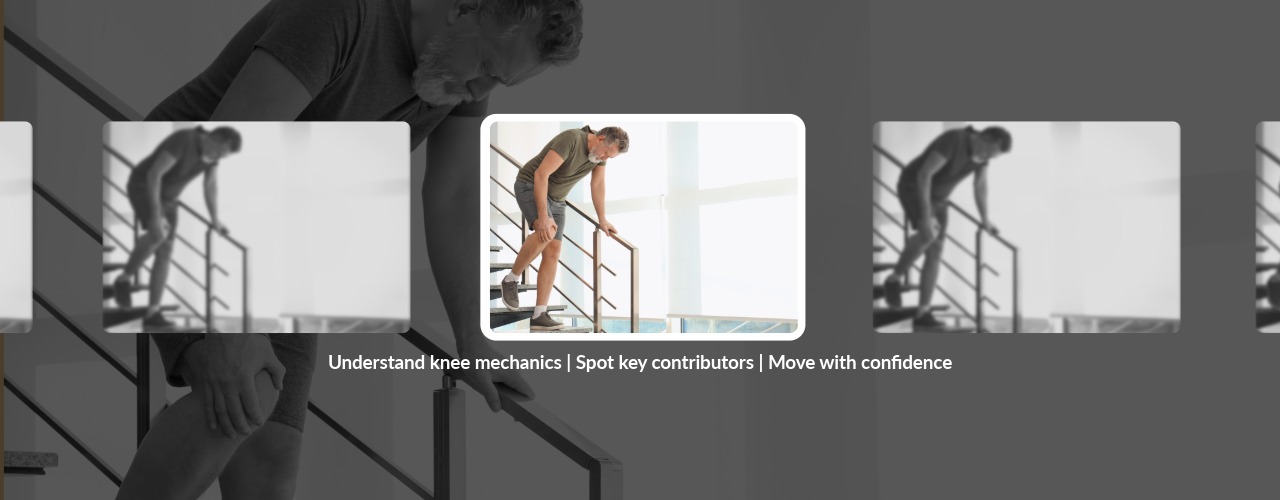
If you have ever noticed pain behind kneecap going down stairs, you are not alone. Many people find that walking downstairs feels more uncomfortable than walking up, even when the knee seems fine during other activities. This common symptom is often linked to patellofemoral pain syndrome, a condition that affects the way the kneecap moves over the thigh bone. Fortunately, patellofemoral pain syndrome responds well to conservative care, such as physiotherapy at South Sherbrook Therapy.
Why Pain Behind the Kneecap Is So Common When Going Down Stairs
Descending stairs places greater force through the kneecap than many everyday movements do. As your knee bends to control your body weight, the kneecap presses more firmly against the groove in the thigh bone. If the tissues around the kneecap become irritated or the joint is not moving as efficiently as it should, this increased pressure can lead to discomfort.
Although the pain can be frustrating, it does not necessarily indicate significant damage to the knee. In many cases, symptoms can improve with the right assessment and management plan.
Looking Closer at Patellofemoral Pain Syndrome
Patellofemoral pain syndrome is one of the most common causes of pain behind kneecap going down stairs. It can affect people of many ages and activity levels, from athletes to office workers.
Rather than being caused by a single injury, it often develops gradually as several factors combine over time. The result is irritation of the tissues surrounding the kneecap and changes in how the joint handles everyday movement.
Because the condition develops differently for each person, a thorough assessment is important to identify the factors contributing to the symptoms.
What Can Contribute to Patellofemoral Pain?
Several factors may increase the likelihood of developing patellofemoral pain syndrome, including:
- Sudden increases in walking, running, or sports participation.
- Muscle weakness around the hips or thighs.
- Reduced flexibility in the muscles surrounding the knee.
- Differences in movement patterns during daily activities.
- Previous knee injuries.
- Repetitive bending or loading of the knee.
In some cases, work demands that involve frequent stair climbing, squatting, or kneeling may also contribute to symptoms.
Signs That Point Toward Patellofemoral Pain Syndrome
Symptoms can vary from person to person, but several common features can indicate patellofemoral pain syndrome, including pain behind kneecap going down stairs. Other symptoms include:
- A dull ache around or behind the kneecap.
- Pain after sitting for extended periods.
- Increased symptoms during squatting or lunging.
- Clicking or grinding sensations without significant swelling.
- Stiffness when getting up after resting.
Many people are surprised that their knee looks normal despite feeling uncomfortable. Significant swelling or instability is less common with patellofemoral pain syndrome, which is one reason why a professional assessment is valuable for determining the underlying cause.
How South Sherbrook Therapy Can Help You Move With Greater Confidence
Every person’s experience is unique, so treatment begins with a comprehensive assessment to help us understand the full picture. This might include:
- When your symptoms started.
- Which activities increase or reduce discomfort.
- Your work, hobbies, and activity goals.
- Previous injuries or medical history.
We’ll also perform a physical assessment, which may include observing your walking pattern, checking knee movement, evaluating strength and mobility, and assessing how your hips, ankles, and feet contribute to your overall movement.
This detailed approach helps identify factors that may be placing additional stress on the kneecap.
Developing a Personalized Treatment Plan
Managing patellofemoral pain syndrome is rarely about focusing only on the painful area. Instead, care is designed around the individual and the factors contributing to their symptoms. Depending on your assessment, your physiotherapy plan may include:
- Education about the condition and recovery expectations.
- Guidance on modifying activities while remaining active.
- Progressive strengthening tailored to your abilities.
- Movement retraining to improve knee mechanics.
- Strategies to improve flexibility where appropriate.
- Ongoing monitoring as your symptoms change.
Because every person responds differently, your physiotherapist will adjust your plan based on your progress and personal goals.
Taking the First Step Toward Better Knee Health
Experiencing knee discomfort when walking downstairs can feel discouraging, but it is a common concern with many potential contributing factors. Patellofemoral pain syndrome is often manageable with an individualized approach that identifies the source of the problem and supports gradual improvement over time.
If you are experiencing pain behind kneecap going down stairs, you do not have to navigate it alone. The team at South Sherbrook Therapy is here to provide a thorough assessment, answer your questions, and develop a personalized plan that supports your goals and daily activities. Contact us today to learn how supportive physiotherapy care can help you move with greater confidence.