



Overcoming Hip Pain: Support for Returning to an Active Lifestyle Managing Persistent Hip Discomfort
Do you feel discomfort in your hips while walking, climbing stairs, or bending down? Hip pain can affect your ability to carry out day-to-day tasks and enjoy your usual activities. A physiotherapist can work with you to help manage your symptoms and improve your mobility.
Understanding Your Hip Joints
Your hips are ball-and-socket joints, where the thigh bone (femur) fits into the hip socket (acetabulum) of the pelvis. A layer of cartilage cushions these joints, reducing friction during movement. Over time or due to injury, this cartilage can wear down or become damaged, leading to pain or reduced function.
Common causes of hip discomfort include:
- Osteoarthritis: This degenerative condition may occur as the cartilage in the joint gradually wears away, often leading to stiffness or reduced mobility.
- Tears and Injuries: Tissues such as ligaments or cartilage may tear due to an acute injury or repetitive stress.
- Bursitis: Inflammation of the bursae—small, fluid-filled sacs that cushion bones and soft tissues—can cause localized tenderness around the hip.
- Muscle Strain: Overuse or sudden movement may strain the muscles or tendons around the hip joint.
In some cases, hip discomfort may also result from fractures, dislocations, or certain medical conditions. If you experience sudden or severe pain—particularly following a fall or accident—please contact a medical professional promptly.

How Physiotherapy May Help
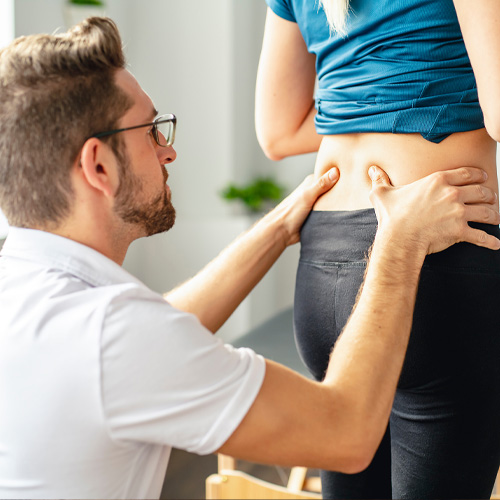
Physiotherapists are regulated health professionals with expertise in assessing movement and function. At your assessment, a physiotherapist will work with you to understand the cause of your hip symptoms and recommend an individualized care plan.
Your plan may include:
- Education: Information about your condition and advice on managing symptoms through posture, activity modification, and self-care strategies.
- Manual Therapy Techniques: When appropriate, hands-on methods such as joint mobilizations may be used to help improve movement and comfort.
- Exercise Prescription: A personalized exercise program designed to help improve joint mobility, increase strength, and support your functional goals.

A Collaborative Approach to Care
One of our patients, a retired teacher, sought care after experiencing ongoing hip discomfort that interfered with daily activities such as walking her dog and getting in and out of chairs. During her assessment, reduced range of motion and muscle weakness around the joint were noted. With a diagnosis of hip osteoarthritis, a tailored care plan was developed.
Over the following weeks, she worked closely with her physiotherapy team, attending sessions and completing her prescribed home exercises. She reported improved comfort and was able to return to her daily walks and gardening with greater ease.
We’re Here to Support You
At South Sherbrook Therapy, we begin with a thorough assessment to understand your symptoms and physical needs. Our physiotherapists will work with you to create a care plan aligned with your goals.
Book your appointment with South Sherbrook Therapy today. Let’s work together to support your recovery.

5 Pool Exercises For a Full-Body Workout
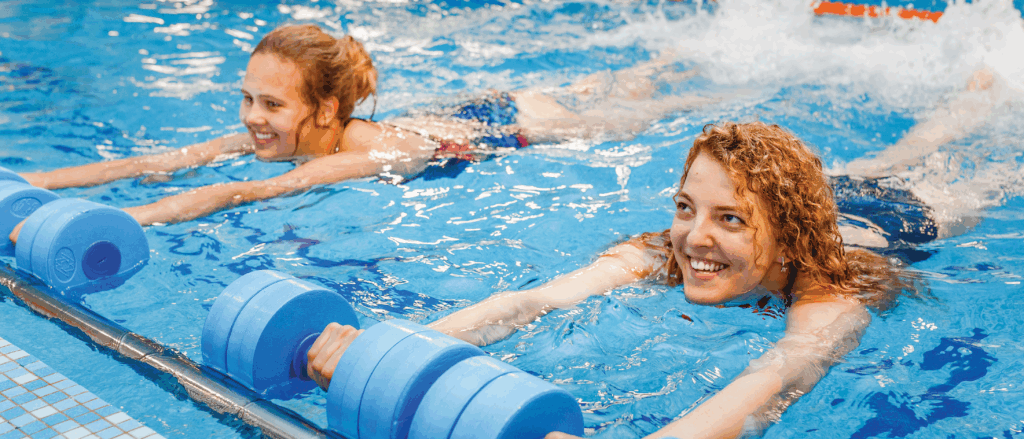
Exercising in water can provide a great full-body workout without some of the drawbacks of land-based exercises.
1. Walk in water. It targets your arms, core, and lower body. Keep your arms in the water and move them as you walk. Engage your core and stand tall.
2. Water arm lifts. Using foam dumbbells will help add more resistance. Stand in water up to your shoulders. Hold the dumbbells at your side, with your palms facing up. Draw your elbows in close to your torso as you lift your forearms to the height of the water. Rotate your wrists to turn your palms facedown. Lower your arms back to the starting position. Do 1-3 sets of 10-15 reps.
3. Lateral arm lifts. This exercise, which targets your upper body, is also best done with foam dumbbells. Stand in water up to your shoulders. Hold the dumbbells at your side. Raise your arms to the side until they’re level with the water and your shoulders. Lower your arms back down to your sides. Do 1-3 sets of 8-14 repetitions.
4. Back wall glide. This exercise helps to activate the muscles in your core and lower body. Hold onto the pool ledge, tuck your knees into your chest, and press your feet into the wall. Push off from the wall and float on your back as far as you can. Draw your knees into your chest, press your feet down to the bottom of the pool, and run back to the wall. Continue this exercise for 5-10 minutes.
5. Leg kicks. This exercise works the muscles in your core and legs. Use ankle weights to make it more challenging. Hold onto the pool ledge or hold a kickboard. Alternate flutter kicking, scissor kicking, breaststroke kicking, and dolphin kicking. Do each kick for 1-3 minutes.
Water workouts are an effective way to boost your cardio fitness while strengthening your major muscle groups, but as with any new exercise program, always speak to your physiotherapist first. Contact South Sherbrook Therapy to see if aquatic exercise is right for you!
June Word Scramble
cresunnse
teaaldcsns
miwsmngi
avoatnic
gdenidw
refiifsle
Answer Key
sunscreen
sandcastle
swimming
vacation
wedding
fireflies

1. Why did Dad bring a ladder to the barbecue?
Because he heard the steaks were high.
2. What’s Dad’s favorite type of music while fixing the sink?
Plumb and bass.
3. Why did Dad put his wallet in the freezer?
He wanted some cold, hard cash.
4. How does Dad measure his grilling success?
In flame-ingos.
5. Why did Dad wear his lawnmower to the dance?
Because he wanted to cut a rug.
6. Did you hear about the restaurant on the moon?
Great food, no atmosphere.
7. What did the ocean say to the beach?
Nothing, it just waved.
8. Why don’t skeletons fight each other?
They don’t have the guts.
9. What do you call a fish wearing a bowtie?
Sofishticated.
10. Why did the golfer bring two pairs of pants?
In case he got a hole in one.
Exercise of the Month
DOUBLE KNEES TO CHEST
Lie on your back with knees bent. Bring both knees toward your chest, holding them gently with your hands. Hold the stretch for a few seconds, then release to improve lower back flexibility.
Thank You For Subscribing!
Blackened Chicken With Avocado Cream Sauce
Ingredients:
- 4 (4 oz) chicken breasts
- 2 tbsp blackened seasoning
- ½ cup plain, Greek yogurt
- ½ avocado
- 1 tsp lemon juice
- ½ tsp garlic powder
- ⅛ tsp salt
- 2 tbsp green onions, thinly sliced

Directions:
Place the chicken breasts and blackened seasoning in a large resealable bag. Seal and shake a few times to evenly coat the chicken. Lightly coat a large skillet with nonstick cooking spray and heat over medium-high heat. Add the chicken and cook until cooked through, 4-6 minutes per side. Meanwhile, in a food processor, combine the yogurt, avocado, lemon juice, garlic powder, and salt and pulse until smooth and creamy. To serve, top each chicken breast with 2 tablespoons of the creamy avocado sauce and garnish with ½ tablespoon green onions.