


Your Knee Hurts. What Should You Do Next?
Knee pain that seems to appear out of nowhere can be frustrating, especially if you rule out arthritis or an obvious injury. It can keep you from the activities you love, and you might worry that every twinge of pain on the stairs is just making the problem worse.
Fortunately, knee pain doesn’t always indicate serious damage. In many cases, your discomfort stems from factors you might not have considered, such as how much stress your knee is taking on or your body’s overall movement patterns.
Fortunately, the South Sherbrook Therapy team is here to help you decide what to do next.

Knee Pain Explained
The knee is a weight-bearing joint that works with the hips, ankles, and feet as you move throughout your day, whether you’re walking, squatting, or running.
Pain can develop in the knee for several reasons. If you’re an athlete, your first thought might be a serious sports injury, such as an ACL or meniscus tear. If you’re older, you might worry you have arthritis.
These are certainly common enough reasons for knee pain, and it’s worth getting them checked out if you suspect that they might be the case. However, they aren’t the only source of knee pain. Other factors can play a role, too.
Unexpected Reasons Your Knees Might Hurt
Overuse
Your knee can become irritated when activity increases faster than your body can adapt. Maybe you’ve gotten back into running after some time away, or you have a new job that requires you to spend a lot more time performing repetitive lifting activities.
This doesn’t necessarily mean something is damaged. Your knee may simply need a better balance between activity, recovery, and gradual progression.
Body Mechanics
Your knee doesn’t move by itself. Your hips, ankles, and feet all help control how forces travel through your leg. An issue in any of these areas (such as reduced hip control) can change how your knee moves while running, taking the stairs, or performing other key movements.
This places more demand on the joint, potentially leading to pain.
Muscle Strength
Your quadriceps, hamstrings, calves, and hip muscles help absorb and control force with every movement. If those muscles aren’t ready for the demands of your activities, your knee may have to work harder, which means it becomes fatigued faster. Pain can be the result.
What Should You Do Next?
You know your knee hurts, but you aren’t sure what your next steps should be. Here’s a guide that can help you make the right decision for your needs.
Rest and Self-Care
Most people will default to rest if their knee hurts. Keep in mind that we generally don’t recommend complete rest. Instead, you want to temporarily modify or avoid activities that aggravate your symptoms while staying active in other ways. Ice or heat may also help with short-term symptom relief.
When to Choose This Option
- Pain is mild and started after a recent increase in activity.
- You can still comfortably complete most daily activities.
- Symptoms improve when you reduce the aggravating activity.
- The knee feels progressively better day over day.
Visit South Sherbrook Therapy
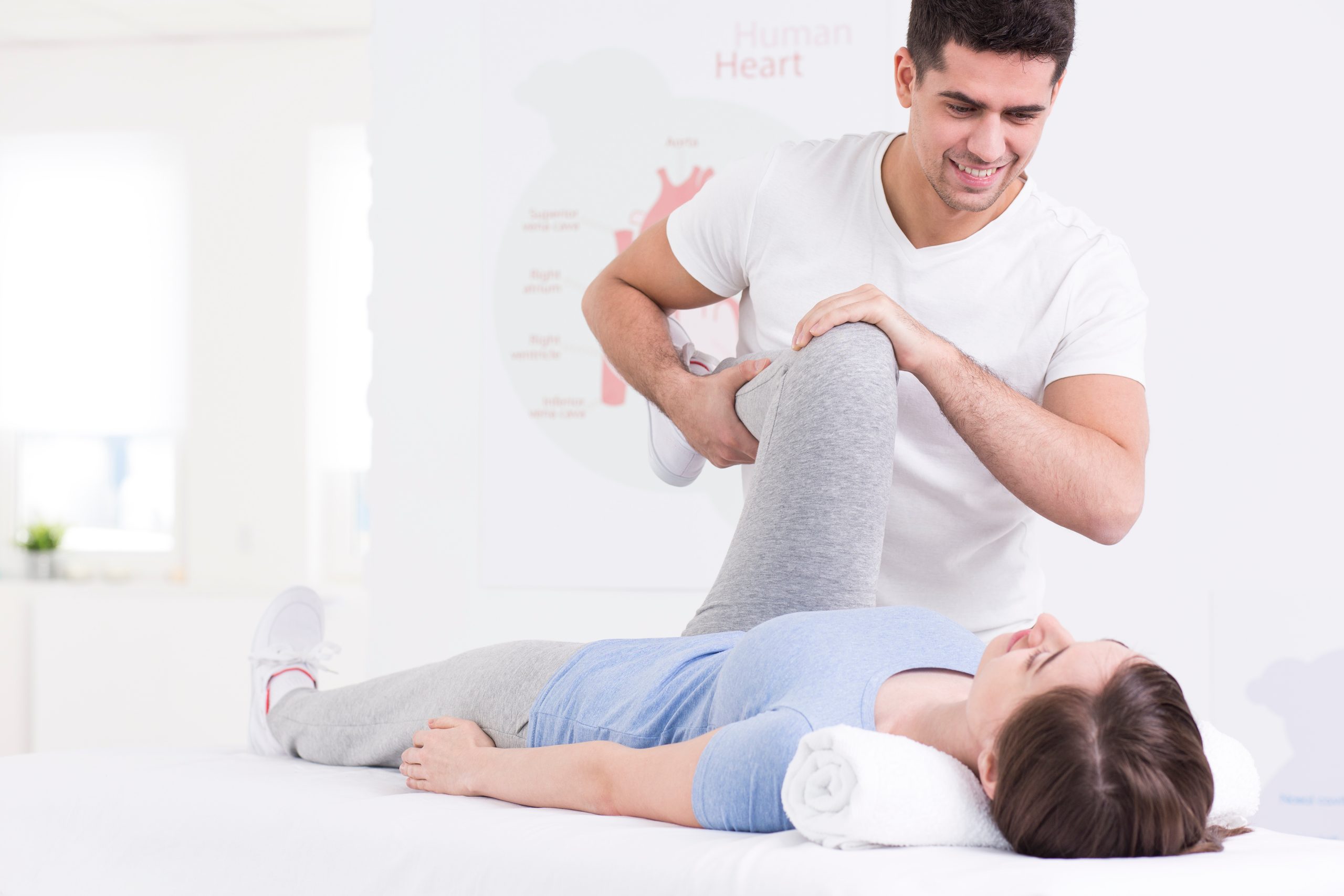
If your knee pain doesn’t improve, worsens, or begins limiting more of your usual activities, it may be time to pay us a visit. Our physiotherapists can assess your symptoms, strength, mobility, movement patterns, and more to identify factors that may be contributing to your symptoms.
From there, we can guide you on what will work best for your needs. For example, if we identify a specific injury, you’ll likely benefit from a comprehensive rehabilitation program to rebuild strength, control, and physical capacity. However, if we see signs of arthritis, we offer options for both acute and long-term pain management.
When to Choose This Option
- Pain keeps returning with the same activities.
- Symptoms are not improving with reasonable self-care.
- Knee pain is limiting work, exercise, stairs, or recreation.
- You’re unsure why your knee hurts or what activities are safe.
Give Your Knee the Support It Needs
If knee pain is keeping you from your normal activities, the team at South Sherbrook Therapy can help identify contributing factors and develop an individualized treatment plan tailored to your needs and goals.
Schedule an assessment today and take the next step toward moving with greater comfort and confidence.
Sources: https://pubmed.ncbi.nlm.nih.gov/36611559/, https://pubmed.ncbi.nlm.nih.gov/36150753/, https://onlinelibrary.wiley.com/doi/10.1002/msc.70059

Ready for a Pain-Free Fall?
Don’t let aches and pains keep you indoors this season. Contact us today to request an appointment and let our physiotherapists help you get back to the autumn activities you love!
🍁 Knee Pain: Myth or Fact?
Test your knowledge on knee pain, recovery, and knowing when to get it checked.
Follow Us on Social Media!
Leg extension with leg raise
Quadriceps • Knees
Sit up straight in a chair with your feet flat on the floor. Slowly extend one leg out in front of you until it’s straight, squeezing your thigh muscle. Hold briefly, then lower it back down with control. Alternate legs or complete all reps on one side before switching. (Materials needed: chair)
Track Your Sets
Complete all 3 sets for your workout.
Thank You For Subscribing!
Ingredients
- 2 Tablespoons oil
- 1 1/2-2 pounds chicken breasts cut into pieces
- 6 Tablespoons butter
- 1 small onion finely diced
- 2 Tablespoons minced garlic
- 2 Tablespoons grated fresh ginger
- 1 Tablespoon garam masala
- 1 teaspoon turmeric
- 1 teaspoon smoked paprika
- 1 teaspoon chili powder
- 1 teaspoon salt
- 15 ounce can diced tomatoes undrained
- 6 ounce tomato paste
- 1 cup chicken broth
- 1 cup heavy cream
- ¼ cup chopped cilantro optional
Directions
- Heat oil in a large skillet over medium high heat. Add chicken and stir to cook until done, about 5 to 7 minutes. Remove from skillet and set aside.
- Melt butter in the same skillet, then add the onion, garlic and ginger. Cook until onions are translucent, about 3 to 5 minutes.
- Add the garam masala, turmeric, smoked paprika, chili powder and salt and mix well, cooking about a minute to let the flavors meld together.
- Add the diced tomatoes, tomato paste and chicken broth and return the cooked chicken to the skillet. Bring to a boil, then lower heat and simmer uncovered 10 to 15 minutes, until sauce has thickened.
- Remove from heat and stir in the heavy cream and cilantro.
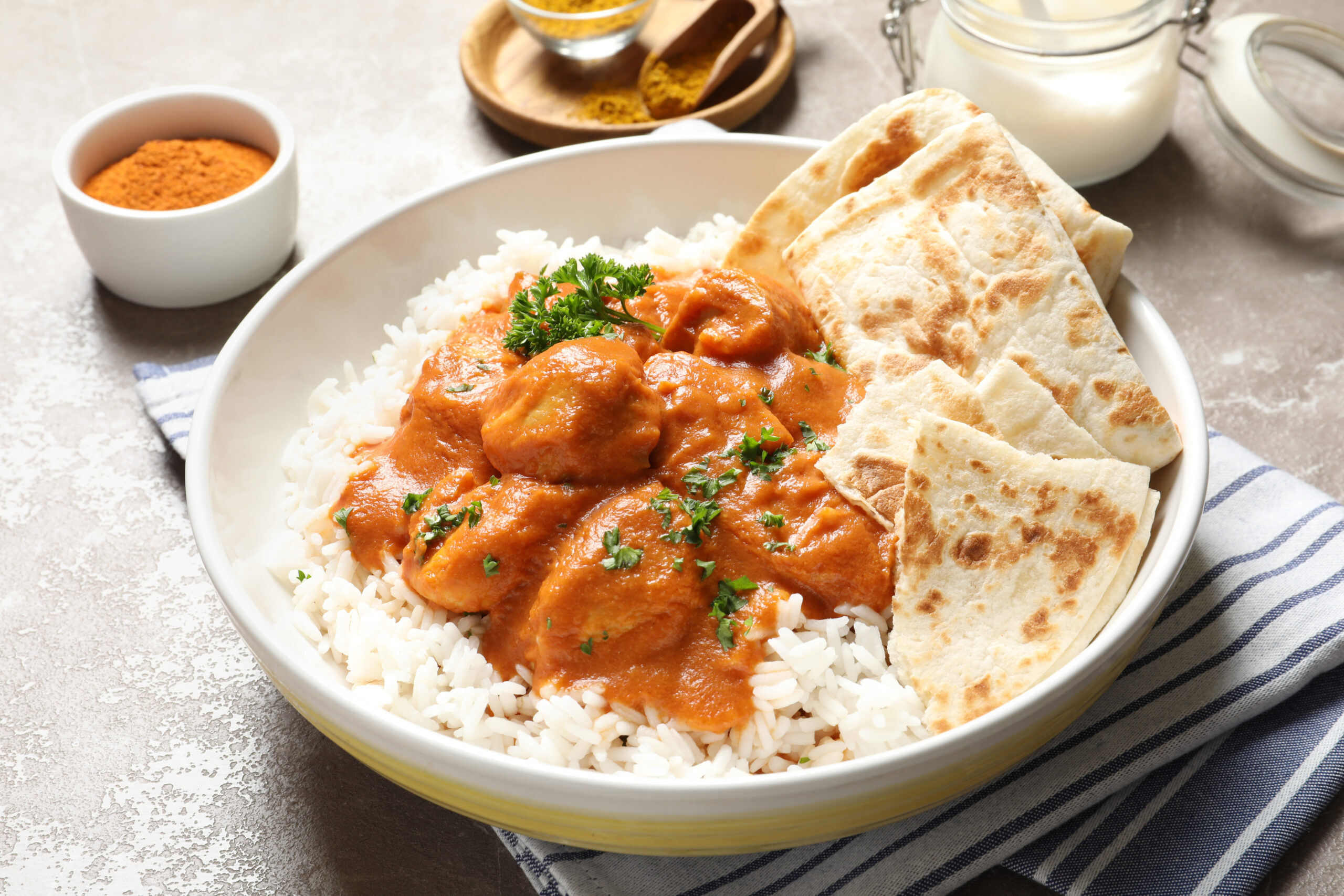
- Serve over rice, if desired.